
Research
Controlled doping of non-metallic light elements and defects into carbon materials via halogenation-dehalogenation processes
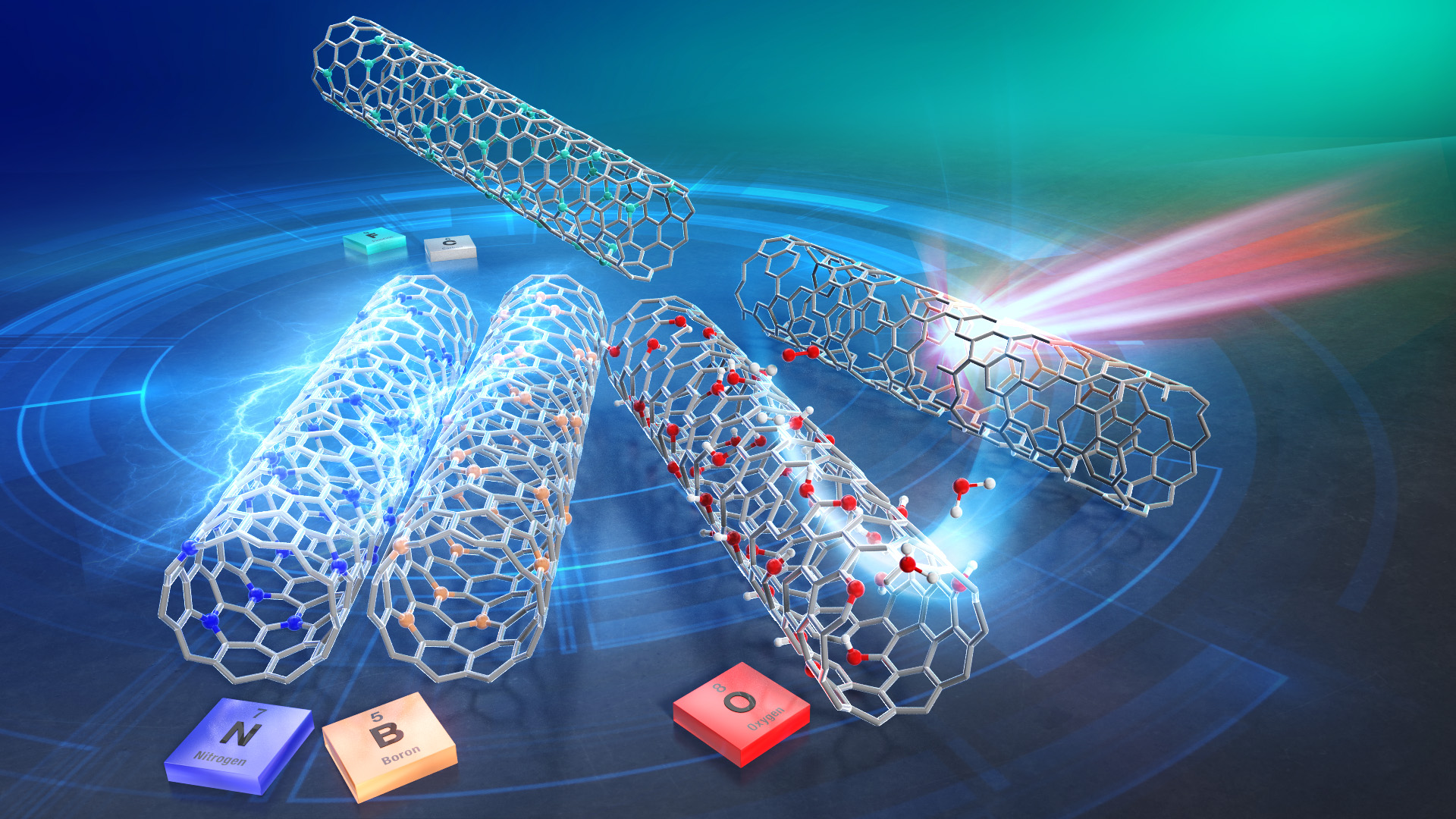
The basal plane of carbon materials with sp2-hybridized covalent bonds is chemically stable. However, when vacancy defects and non-metal light elements, such as boron, nitrogen, fluorine, sulfur, and phosphor, are introduced in the basal plane, their chemical and physical properties change drastically. In our study, by reacting fluorinated carbon nanomaterials with ammonia gas at 300–600 °C, we succeeded in synthesizing nitrogen-doped carbon nanomaterials (with pyridinic-, pyrrolic-, and graphitic-type nitrogen species). The nitrogen doping mechanism is as follows: when fluorinated carbon nanomaterials are heated, fluorine groups will be detached from the carbon structure along with the carbon atoms to produce carbon fluorides. Moreover, vacancy defects are formed by this process. As the edges of the resulting vacancy defects are energetically active, the active carbon atoms at the edges will react with ammonia, and nitrogen atoms will be introduced into the carbon frame. We attempt to control the surficial, chemical, and physical properties of carbon nanomaterials.
Design and creation of functional carbon material catalysts for polymer electrolyte fuel cells and low-temperature ammonia fuel cells
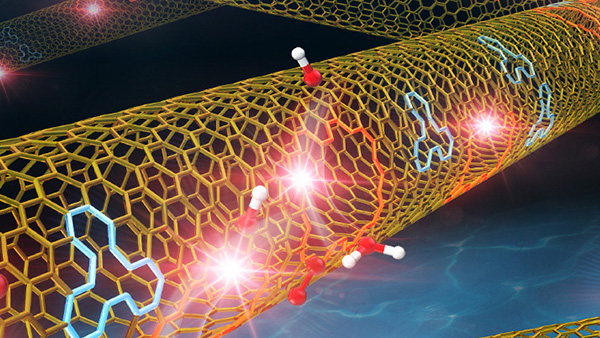
Hydrogen energy is a candidate for a new alternative energy system because hydrogen and ammonia molecules can be generated from various resources, stored, and transported. Although hydrogen-energy-harnessing polymer electrolyte fuel cells (PEFCs) have been expected, they have not yet been widely used. Platinum, an oxygen reduction reaction (ORR) catalyst, is an expensive and non-abundant resource, and it has poor durability for ORR activity. Therefore, metal-free carbon nanomaterials have been developed as alternative platinum catalysts. Nitrogen-doped carbon nanomaterials have been reported to exhibit especially high ORR catalytic activity. However, the ORR mechanism has not been clarified. To achieve highly efficient ORR activity, doping nitrogen species should be precisely controlled in the carbon framework. In this study, we try to dope nitrogen atoms to carbon nanomaterials via a fluorination–defluorination process to clarify the mechanism of ORR catalytic activity.
Creation of functional materials for energy harvesting
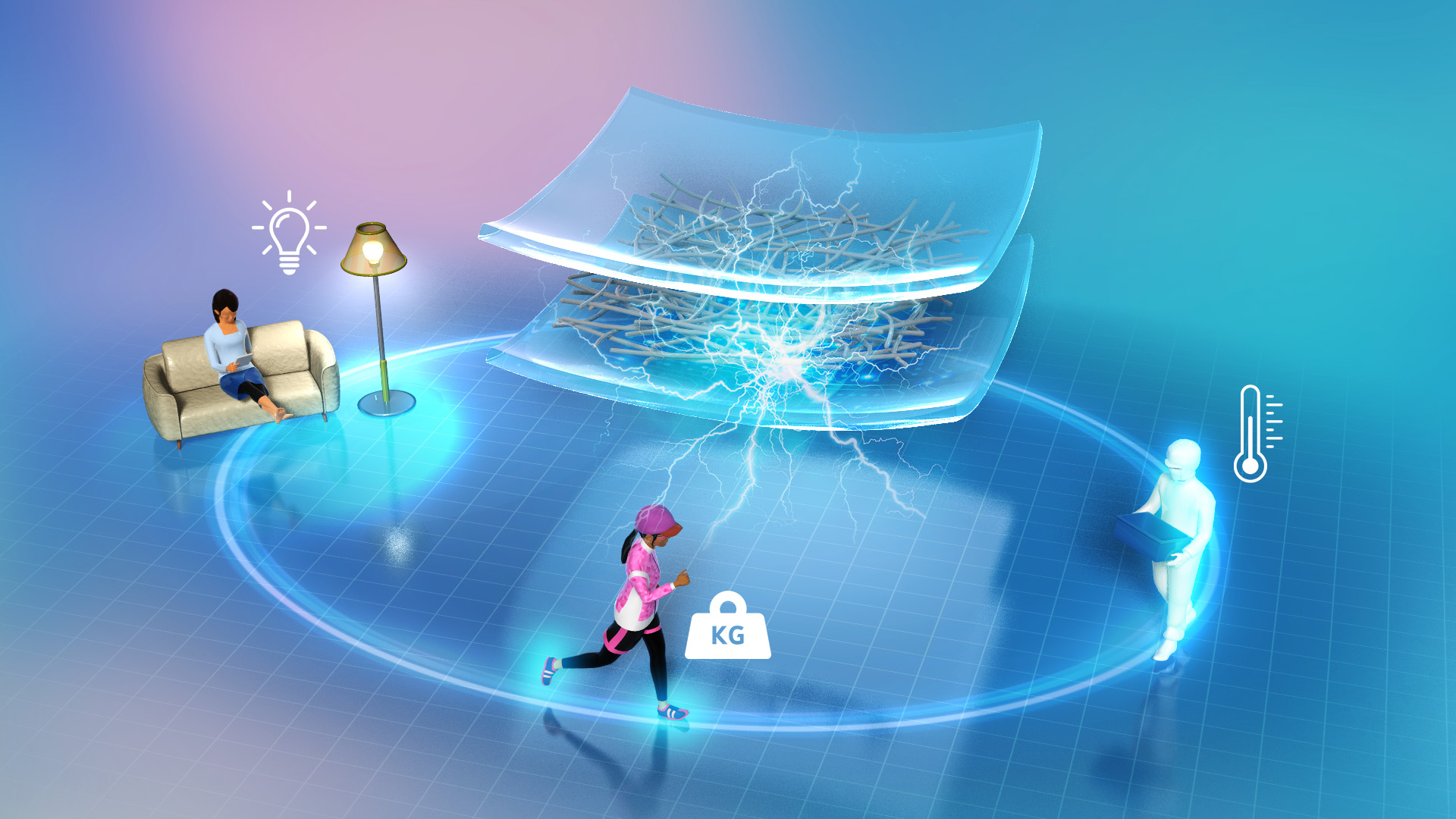
Energy harvesting is a technology that captures minute amounts of energy from living environment, converts them into electricity, and utilizes the converted electricity. These minute energy sources are light, heat, vibration, and electromagnetic waves. Energy harvesting, which generates electricity unnoticed and utilizes it effectively, is attracting attention for building a sustainable society related to the SDGs (Sustainable Development Goals). This research challenges the creation of functional energy harvesting materials utilizing light, load, heat, and biomass.